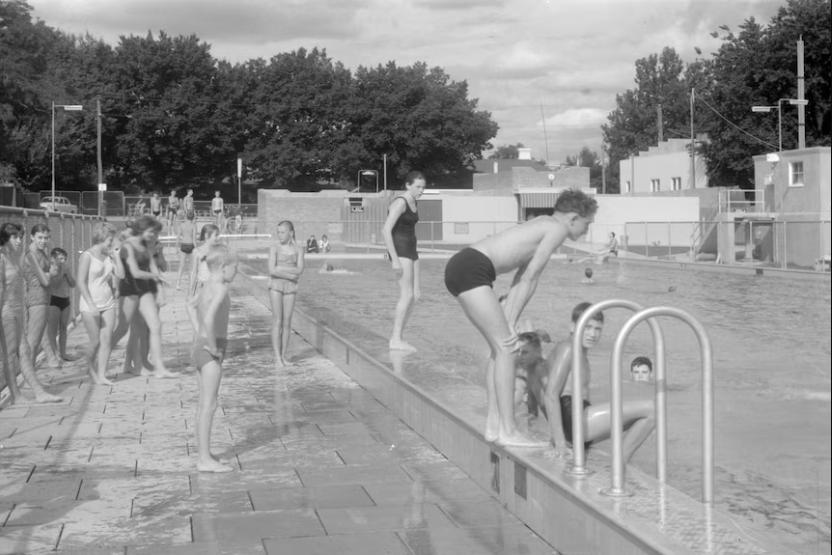
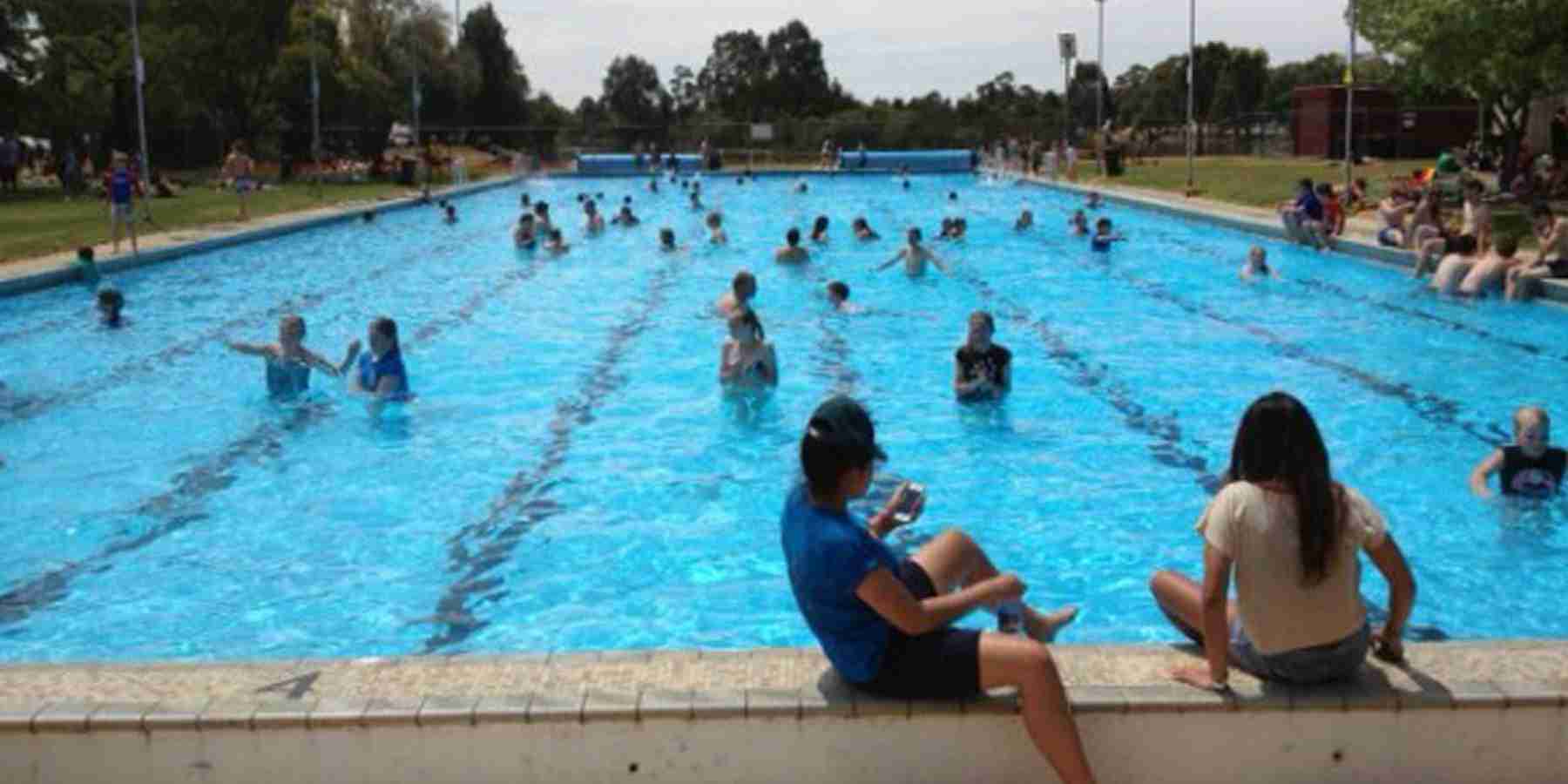
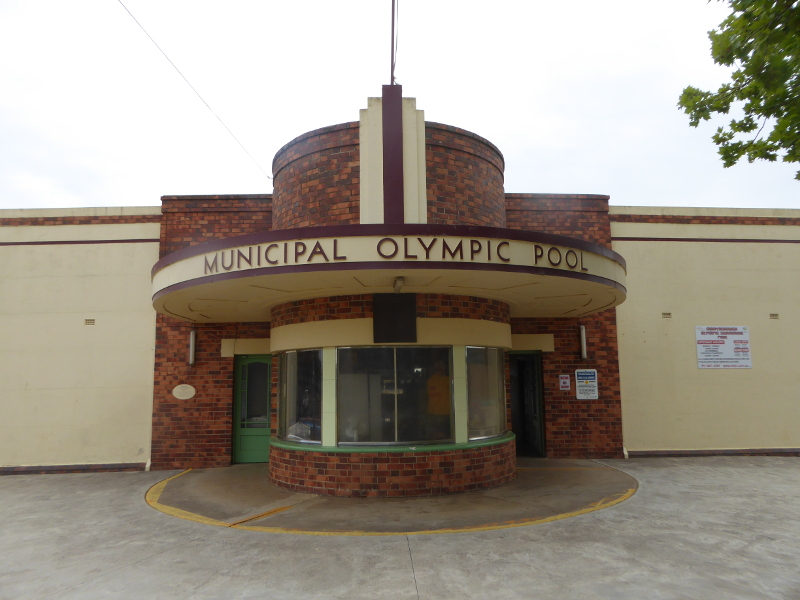
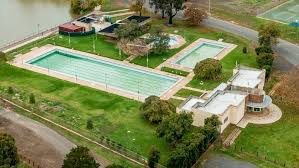
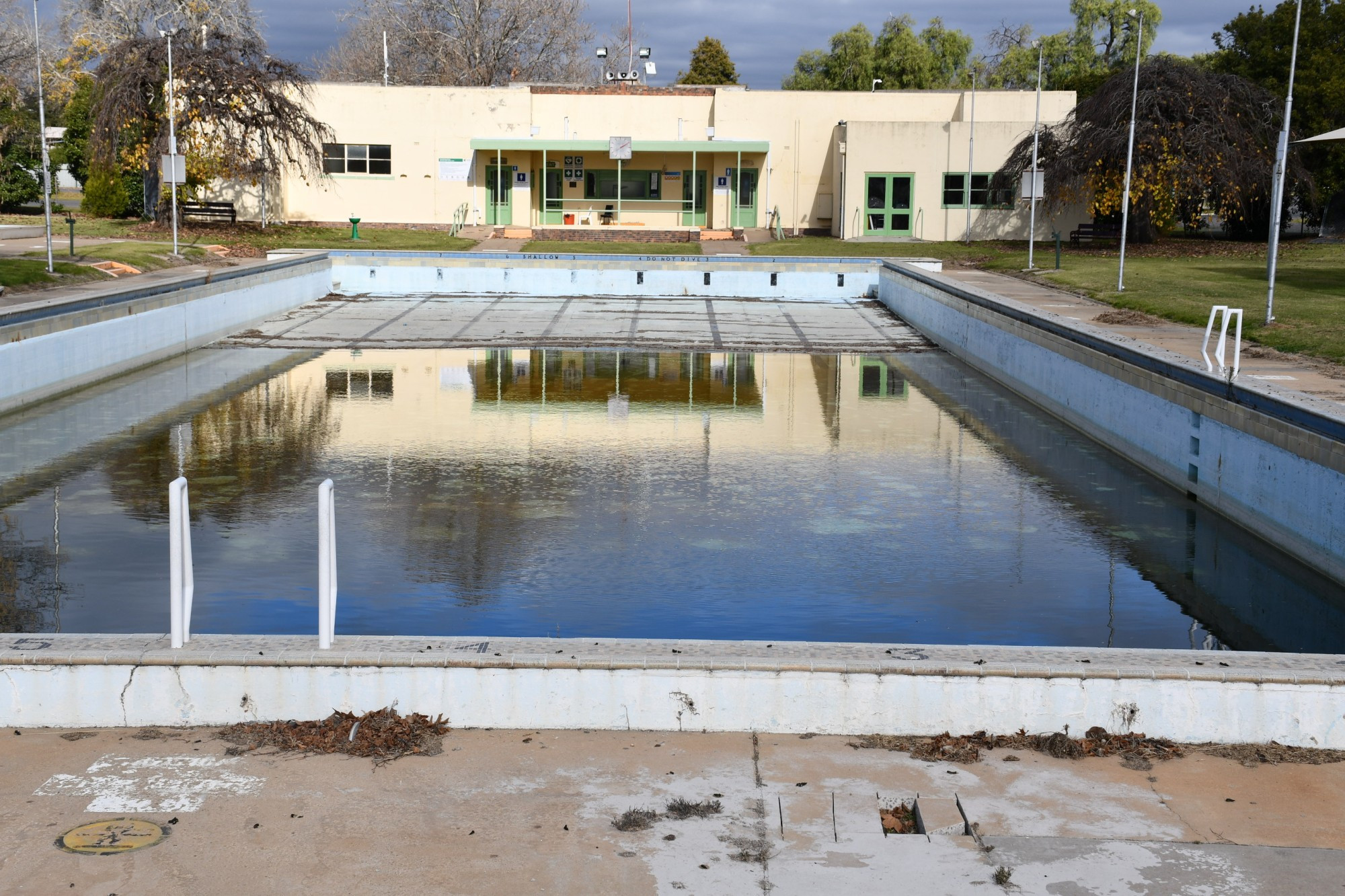
The Maryborough Municipal Olympic Swimming Complex was opened by Sir Frank Beaurepaire in 1940
and designed by local architect EJ Peck and city engineers EJ Muntz and J Hocking. As constructed,
the complex comprised an entrance pavilion, an Olympic swimming pool, an octagonal wading pool,
and service buildings all within a garden setting. The reinforced concrete and brick entrance
pavilion was designed in a style strongly influenced by the aesthetics of European functionalism.
The Maryborough complex was contemporary with a number of other similar municipal council schemes
providing modern, safe and hygienic swimming facilities, manifesting the changing public nature of
bathing and swimming from chiefly a health related activity to a recreational pursuit. An
intermediate pool was added to the Maryborough complex in 1973. The site remains remarkably intact,
with the original pools, entrance pavilion and planting scheme retained in close to original condition.
The swimming complex is architecturally significant as a rare, intact example of a swimming pool
complex designed in the late 1930s. The entrance pavilion is architecturally important as a
recreational building employing the architectural language promoted by European functionalist
architects of the 1920s and 1930s and symbolising a concern for modernity, safety and hygiene.
The complex has aesthetic significance as a well planned recreational facility with an intact,
late 1930s garden setting, all picturesquely set within and overlooking a nineteenth century
municipal park.
The Maryborough Municipal Olympic Swimming Complex is historically significant as an example of
a municipal pool complex illustrating the development of swimming in Victoria during the
inter-war period. The pool complex has historical significance for its special association with
Frank Beaurepaire, being one of the few surviving pools opened by him as part of his long
commitment to swimming in Victoria and, particularly, associated with his fostering of building
programmes encouraging the provision of municipal pools throughout the state.
Public pools provide significant health, social, and safety benefits by offering accessible,
low-impact exercise for all ages, strengthening community connection, and serving as vital
water safety education hubs. They aid in improving cardiovascular health, building muscle,
reducing stress, and assisting in injury rehabilitation while reducing obesity risks.
For families, they offer a venue to boost children’s physical health and water safety
awareness. The aquatic industry also contributes to reducing social isolation and encouraging
community participation.
Key Benefits of Public Pools:
Physical health & fitness: swimming offers a full-body, low-impact workout that
strengthens muscles and improves cardiovascular endurance without putting pressure
on joints.
They are ideal for rehabilitation and pain management.
Mental well-being: regular swimming helps reduce stress, anxiety, and depression while
improving mood and cognitive function.
Social & community Hubs: public pools serve as community hubs that foster social
interaction, cohesion, and cross-cultural collaboration, often creating local jobs.
Safety & education: they provide safe environments for children and adults to learn
essential swimming and water survival skills.
Accessibility: they offer an affordable way to exercise and cool down, especially in
remote regions or during hot weather.
Mental health boost: the calming effect of water and exercise can help reduce stress and
anxiety, promoting overall mental health.
Safety improvements: public pools provide a safe and controlled environment for swimming
and water safety education.